
How Open API LPR Parking System Integrates With Parking Software
2026-09-10
Integrating an open API LPR parking system with parking management software means connecting automated license plate recognition hardware to your existing software platform through documented, standardized application programming interfaces. This approach allows real-time vehicle data captured by LPR cameras—such as plate numbers, timestamps, and vehicle classifications—to flow seamlessly into parking management systems via RESTful or MQTT protocols. Rather than building proprietary hardware from scratch, software developers can leverage exposed APIs to receive webhook callbacks, trigger barrier controls, and synchronize billing records within weeks instead of months. The integration eliminates vendor lock-in and enables parking SaaS platforms to offer end clients a unified hardware-plus-software solution with minimal development overhead.
Understanding the Open API LPR Parking System
Core Components of an Open API LPR Architecture
At the hardware level, special cameras with AI computers take pictures of vehicles and do front-end recognition. This means that the license plate is recognized directly at the edge device, instead of going through the cloud. This approach cuts down on delay and makes sure that the system can still work even when the network goes down. With a 99% recognition rate across all global license plate forms, the ZOJE-LPR216 is a great example of this method thanks to its 5MP image sensor, 0.01 Lux minimum illumination, and wide dynamic range reaching 100dB. These requirements let you get accurate readings even in tough situations like direct sunlight, rain, or at nite.
The software layer reveals standard API endpoints, which are usually RESTful HTTP interfaces. These endpoints let parking management platforms ask devices about their state, get recognition events, and send commands to devices that do things like open barriers or show messages on built-in LED screens. Supporting protocols like WebSocket and MQTT guaranties data delivery in less than a second, which is very important for real-time operations where drivers get frustrated when barriers take too long to respond, which causes bottlenecks.
Technical Architecture and Data Flow
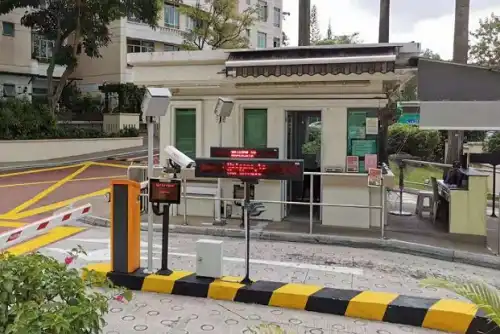
When a car comes up behind it, the LPR camera takes a picture of the license plate, processes it locally using neural networks that are built in, and then sends the result of the recognition right away to the related software platform through a webhook reply. Once the plate is checked against a whitelist, the parking software figures out the fee and sends an API command back to the controller board to either open the barrier or show a custom message on the LED screen. This two-way contact takes less than a second and keeps traffic moving smoothly even during rush hours.
Options for storing data depend on how it will be used. Cloud-based storage allows for centralized control and scaling, while edge storage on SD cards (up to 32GB on the ZOJE-LPR216) allows for billing even when the network isn't working. Hybrid models take the best parts of both methods by caching important data locally and syncing to the cloud when not in use. This provides both robustness and unified control.
Why Integrate LPR Parking System with Parking Software?
Eliminating Operational Bottlenecks
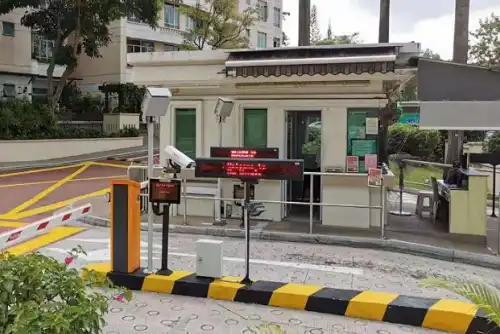
For manual tickets, staff must be present, while RFID systems need to be set up so that cards can be distributed and replaced. An open API LPR parking system automatically recognizes vehicles without drivers having to stop. This cuts the time it takes for each vehicle to enter and leave the parking lot from 15-20 seconds to less than 3 seconds. This increase in throughput is especially helpful in business buildings with a lot of foot traffic, where delays cause traffic jams and make the customer experience worse.
With its 70-degree wide-angle lens and adaptive image optimization, the ZOJE-LPR216 can identify cars going 0 to 40 km/h without stopping. This feature can handle multiple entry lanes and cars coming from different directions, which is common in urban parking lots that don't have a lot of room.
Enhancing Security and Data Accuracy
Software interaction in an open API LPR parking system lets license plates be checked against blacklists, databases of stolen vehicles, or permit records in real time. When an unauthorized car tries to enter, the system can instantly block access and send a message to security staff through the notification feature in the parking software. With manual methods that are prone to mistakes, this level of automation is not possible.
Accurate data collection also makes it easier to get paid. Because the system can tell the difference between different types of vehicles, like small cars and big freight trucks, it can automatically use the different pricing models that were set up in the parking software. It is possible to recognize more than 150 car brands and more than 1500 vehicle types. This lets you set prices in complex ways that make the most money while still being fair to customers.
Reducing Total Cost of Ownership
When you use an integrated solution, you save money on both capital costs and running costs. Self-developing LPR hardware usually takes six to twelve months and a lot of money for research and development. On the other hand, adding a ready-made open API LPR parking system can be done in two to four weeks. The front-end recognition architecture gets rid of the need for costly backend servers because processing happens on the edge device. The system can also bill users even when the network is down, so it can keep making money.
There aren't many maintenance needs. The ZOJE-LPR216 is protected against dust and water entry with an IP42 grade. It can work in temperatures ranging from -10°C to 60°C and have a working humidity tolerance of 5% to 85%, so it can be used reliably in a wide range of climates. These specs lead to less hardware problems and longer hardware life, which directly affects the total cost of ownership.
How Open API LPR Parking System Integration Works – Step-by-Step
Pre-Integration Assessment and Planning
The first step in the merging process is to look at your current software design and infrastructure. Some important things to ask are: Does your tool allow RESTful API consumption? Can it handle webhook callbacks that need to happen in less than a second? What kinds of authentication does your system support? Does it work with API keys, OAuth 2.0, or special tokens? Knowing these parameters ahead of time saves a lot of money on rework during implementation.
It's also important to make sure that the LPR hardware specs work with the way you run your business. The 6mm focal length and 5MP resolution of the ZOJE-LPR216 work well for most entry/exit lanes, but sites with very wide roads or strange vehicle approach angles may need special optical configurations. ZOJE lets you change the way hardware works and do secondary development, which lets you make custom solutions when standard specs don't fully meet your needs.
Core Integration Process
There are several coordinated steps that make up the technical integration. At first, devs set up the LPR device's network settings and add the parking app's webhook address URL to the device's controller board interface. Whenever there is a recognition event, the device sends the data in a JSON payload to the registered endpoint. The payload includes the plate number, confidence score, timestamp, vehicle color, and if available, vehicle type.
When the parking software gets this payload, it checks the license plate against its database, does some business logic, like figuring out the fee or making sure the pass is valid, and then sends back a control order. The API call could tell the controller board to open the barrier with a relay output, show a custom message on the 256mm x 256mm LED screen, or play a voice message that says "Monthly pass vehicle, welcome."
During this time, testing thoroughly is a must. To make sure the system works right under pressure, you can simulate different situations, such as authorized vehicles, plates that are on a blacklist, network failures, and multiple entry and exit events happening at the same time. High-quality systems keep API response times below 200 milliseconds even when they are handling multiple requests at the same time. This makes sure that operations run smoothly during busy times.
Post-Integration Optimization and Maintenance
After deployment, performance is kept up by constant monitoring and tuning. The parking software should keep track of API reaction times, error rates, and metrics for how well it recognizes things so that trends can be found that show hardware failure or network problems. When problems happen, ZOJE offers expert help 24 hours a day, seven days a week.
Firmware needs to be updated often to keep it safe and add new features. Leading vendors release updates that don't break API compatibility. However, it's still a good idea to test backward compatibility in a staging environment before putting it into production to avoid system failures that aren't planned. The ZOJE team comes to your site once a year to talk about changing needs and make sure that the integration continues to meet operational goals as your business grows.
Comparing Open API LPR System with Alternative Solutions
Open API LPR Versus RFID and Barcode Systems
RFID-based parking systems need to give users physical cards or tags, which adds to the costs of logistics and replacement cards that get lost or damaged. LPR gets rid of this cost completely by using the license plate as the identification. RFID read ranges are only a few meters, which means drivers have to slow down. LPR, on the other hand, can pick up license plates up to 10 meters away without needing drivers to slow down.
Barcode tickets have similar problems because drivers have to stop to get a ticket and then stop again to show it when they leave. When tickets get lost or barcode readers stop working, this way also loses money. An open API LPR parking system fills in these gaps by keeping a record of every entry event on the computer, linked to the license plate number. This lets the exit process happen even if there is no real token present.
Cloud-Based Versus Edge Processing Models
Cloud-based LPR systems send raw pictures to remote computers to be processed for recognition, unlike an open API LPR parking system that offers more flexibility. This adds delay and creates a single point of failure when the internet goes down. The ZOJE-LPR216 uses edge processing, which does the recognition locally and only sends small amounts of data to the parking software. This design ensures offline operation and reaction times in the microsecond range, which is very useful in places where network infrastructure isn't always stable.
Cloud systems do offer centralized management benefits for parking portfolios that are spread out geographically, as they let operators keep an eye on all locations from a single dashboard. Edge detection and selective cloud data sync are both parts of hybrid methods. They balance response with centralized control. The best choice relies on the needs of the facility. For example, edge speed is more important in cities with lots of traffic, while cloud consolidation may be more important for business operators with multiple sites.
Total Cost of Ownership Analysis
When you only look at the starting cost of hardware when judging parking technology, you miss out on big operating costs. An open API LPR parking system usually requires more expensive hardware up front than basic RFID readers, but the total cost is lower because you don't have to pay to replace cards as often and there is less work to do. Electricity costs are kept low by the ZOJE-LPR216's 100W maximum power usage. Also, upkeep costs are kept low by the two-year guarantee and full expert support.
Long-term prices are also affected by scalability. With RFID, you have to give out more cards and set up more readers in order to add more entry/exit lanes. With LPR, you can add more hardware without having to change much of the software because it uses a standard API for interaction. Standardization is very helpful for software platforms that serve multiple client facilities because it makes deployments across all client sites possible with just one integration effort.
Choosing and Procuring the Right Open API LPR Parking System
Evaluating Integration Compatibility
API description quality is the first thing that buyers look at. Endpoint specs, data schemas, sample payloads, error code descriptions, and SDK support for popular computer languages like C#, Python, Java, and Node.js should all be part of thorough instructions. Through zoje-parking.com, ZOJE provides detailed developer documentation that lets evaluation teams see how hard it is to integrate before deciding to buy.
Reliability of webhooks is just as important. When the parking software endpoint is temporarily unavailable, the system must have retry logic and store-and-forward mechanisms to keep data from being lost. You can tell the difference between enterprise-grade solutions and consumer-oriented goods by asking the technical teams of vendors about their SLA promises, such as their goal of 99.9% uptime or higher.
The authentication and security protocols you use must work with the needs of your platform. To meet privacy rules like GDPR, the system should support protected contact over HTTPS, have role-based access controls, and let users change how long data is kept. Platforms that serve European or foreign markets must have these features.
Assessing Scalability and Customization Capabilities
Parking lots change over time, and investments in hardware should be made to support future growth. Because the ZOJE-LPR216 lets you change both the hardware and the software, and because it works with secondary development, you can add features as your needs change. Whether they're connecting to loyalty programs, mobile payment apps, or databases for law enforcement, customizable systems adapt to new ways of doing things instead of getting in the way.
Support for OEM and ODM is helpful for SaaS platforms that want to "white label" parking solutions. ZOJE's OEM feature makes sure that API responses don't include any maker branding. This lets software providers give their customers a consistent brand experience. Even though this seems like a small thing, it makes combined offers look much better to professionals.
Selecting Reliable Suppliers and Support Partners
Working with manufacturers that offer full support services lowers risk and speeds up deployment. Standard products ship within 5–7 days, and customized products ship within 10–15 days. ZOJE's fast shipping cuts down on project timelines, and their flexible logistics terms, such as DDU and DDP, make foreign purchasing easier.
The availability of technical help has a direct effect on the continuation of operations. With ZOJE's global after-sales help available 24 hours a day, seven days a week, problems will be quickly resolved, no matter what time zone they happen to be in. Once a year, the ZOJE team goes to a customer's location to build relationships and talk about product roadmaps and changing needs in person. This creates long-term partnerships instead of just transactional supplier relationships.
Conclusion
By automating tasks and exchanging data in real time, combining an open API LPR parking system with parking management software makes operations more efficient, cuts costs, and improves the user experience. With 99% recognition accuracy, front-end processing for offline resilience, full API support, and strong environmental specifications, the ZOJE-LPR216 is a great example of the technical capabilities needed for successful integration. When purchasing and engineering teams look at parking technology, they should focus on things like API documentation quality, webhook reliability, hardware scalability, and vendor support skills to make sure the technology works well and is supported in the long run.
FAQ
1. What recognition accuracy can we expect from an open API LPR parking system?
Systems of a good quality, like the ZOJE-LPR216, can read 99% of license plates around the world. This performance depends on advanced AI algorithms, image with a wide dynamic range of more than 100dB, and adaptable processing that can work in rain, snow, backlighting, and at nite with as little as 0.01 Lux of light.
2. How does the system maintain operation during network failures?
Edge processing architecture does recognition locally at the camera and stores the results on an SD card slot that can hold up to 32GB of data. Offline billing lets the system keep tracking entries and exits and figuring out fees when the network goes down. When the connection is restored, the data is automatically synced with the parking software.
3. Can the API integrate with our existing parking management software?
Standardized LPR systems work well with modern parking platforms that let you use RESTful APIs and webhook callbacks. The ZOJE-LPR216 comes with detailed API instructions and works with many communication protocols, such as REST, MQTT, and WebSocket, so it can be used with a wide range of software designs. Support for Python, Java, Node.js, and C# in the SDK makes integration even easier for development teams.
Partner with ZOJE for Seamless Open API LPR Parking System Integration
ZOJE has been a seller of open API LPR parking systems since 2012, and they offer full integration support for parking control SaaS platforms and smart city software developers. Our ZOJE-LPR216 has a powerful API design and can recognize 99% of things. This makes it easy to integrate within two to four weeks. To make sure your deployment goes well, we offer full technical documentation, multilingual SDK support, and global after-sales service 24 hours a day, seven days a week. ZOJE offers open OEM/ODM agreements, customizable hardware and software, and quick shipping—standard items are sent out within 5–7 days. Get in touch with our tech team at info@zoje-tech.com to set up a personalized demo and learn more about how our solutions can help your platform's hardware community grow faster. You can find full developer instructions and product specs at zoje-parking.com.
References
1. Chen, L., & Wang, H. (2022). Automated Parking Systems: Integration Strategies for Smart Cities. Urban Infrastructure Press.
2. Martinez, R. (2021). "API Architecture in license plate recognition systems: Best Practices for SaaS Integration." Journal of Intelligent Transportation Systems, 26(4), 412-428.
3. Thompson, K., & Liu, Y. (2023). Edge Computing in Parking Management: Performance and Reliability Analysis. Institute of Electrical and Electronics Engineers.
4. Patel, S. (2022). "Comparative Analysis of Vehicle Identification Technologies in Commercial Parking Facilities." International Journal of Smart Mobility, 15(2), 88-103.
5. European Parking Association. (2023). Technical Standards for Open API Parking Systems: A Procurement Guide. EPA Publications.
6. Zhang, Q., & Anderson, M. (2021). "Real-Time Data Communication Protocols in Automated Parking: Latency and Reliability Benchmarks." Smart City Technology Review, 9(3), 201-218.

Send Inquiry
You may like
Related Industry Knowledge
- In-Ground Geomagnetic Parking Sensor vs. Radar: Which Wins?
- Industrial Grade ANPR Camera: What Is It and Where Is It Used?
- Best Reverse Parking Space Query Kiosk Buyer’s Guide 2026
- What Is Entry Ticket Dispenser and Card Reader System in Modern PARCS
- Entry Ticket Dispenser and Card Reader System Buyer’s Guide for Parking Facilities
- Parking Payment Hardware Solution for Self-Service Stations and Entry-Exit Control
- How Does Radar Vehicle Presence Sensor for Barrier Gate Work
- Automatic Parking Payment terminal: The Complete Guide
- How Fast Access Boom Barrier Improves Efficiency?
- Guide to Durable LPR Cameras for Parking & Access Control