
Self Service Parking Payment Station: A Guide to Smarter Parking
2026-08-26
Modern parking facilities face mounting pressure to reduce operational costs while delivering seamless customer experiences. A self-service auto-payment station for parking lots represents the cornerstone of contemporary parking revenue control systems, enabling facilities to automate transactions, eliminate queue congestion, and operate continuously without staffing constraints. These intelligent kiosks allow drivers to complete payment independently by scanning tickets or QR codes, selecting from multiple payment methods including cash, credit cards, and mobile wallets, and receiving instant receipts—all within seconds. This transformation addresses critical challenges in shopping malls, airports, residential complexes, office buildings, and commercial parking operations across the United States.
Understanding Self-Service Parking Payment Stations
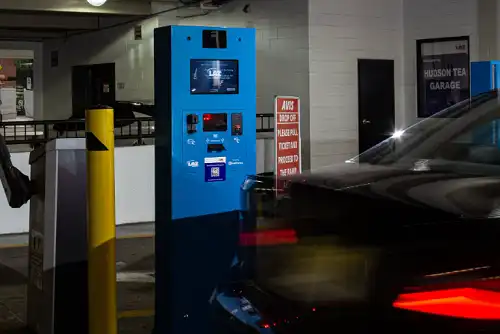
Automated parking payment technology has changed the way that businesses receive money and handle customer flow. Modern payment kiosks are placed near elevators and building entrances so that people can pay before they leave. This is different from traditional exit lanes where drivers pay their tolls while sitting in their cars.
Core Technology and System Architecture
Industrial-grade hardware and complex software integration are the building blocks of automated payment kiosks that work well. Modern stations usually have 15- to 19-inch touchscreens that are toughened, use sensitive technology, and are bright enough to be seen outside (1000 nits or more). These units work with embedded systems that have Android 4.0 or higher installed. They have quick screens that make it easy for users to follow the steps of a transaction.
Users can choose from a variety of payment methods that can be used for processing. For handling cash, there are coin processors that can be customized and note validators that can recycle bills. This lets machines give out change using bills that have already been accepted. This recycling feature greatly lowers the number of times cash needs to be refilled. EMV chip technology is used in credit and debit card processing, along with direct NFC payments. Mobile wallet transactions can be made with QR code readers. Because these payment choices are flexible, no customer will have any problems because of the way they wish to pay.
Integration with Parking Management Ecosystems
For deployment to go smoothly, it needs to connect to existing infrastructure without any problems. Through TCP/IP networks, payment terminals talk to central management software and share real-time transaction data, rate structures, and validation rules. When license plate readers are integrated, things run smoothly. Users can put their plate number on the touchscreen, and the system will quickly get entry timestamps to figure out fees. After the payment is made, the system changes the database so that the exit gates open immediately when the car gets close. This gets rid of any other places where people would have to deal with the system.
Multiple layers of protection are used in the security architecture of these systems. For the structure, 2.0 mm cold-rolled steel or stainless steel 304/316 with a powder coating that resists corrosion is used. Access panels are locked with three-point locking mechanisms, and cash storage uses separate lockable cassettes that need two types of authorization: a physical key and a software password. These are not the same credentials that are used for maintenance access.
Machine Types and Configurations
Parking lot managers can choose from different layouts based on the needs of the facility. Stations with kiosks can do a lot of things, like accept cash, process cards, and print receipts. They come in weatherproof cabinets that can stand alone. Mobile-integrated units keep hardware to a minimum by sending users to smartphone apps while keeping a basic screen for customers who don't have access to a mobile device. In setups that allow license plate recognition, there are no more paper tickets. Instead, camera systems are used at entry and exit points, and payment stations search plate databases during deals.
Each configuration is useful in a certain set of operational situations. Multi-station setups that handle all cash during busy shopping times are good for shopping places with a lot of customers. Office spaces where most of the permit users only need a monthly permit may put in place simpler validation stations. For airport long-term lots to be as reliable as possible, they need dual-redundancy power sources and large-capacity hoppers to cut down on maintenance times in harsh circumstances.
Benefits and Advantages of Self-Service Parking Payment Kiosks
Moving to an automated payment system leads to measurable gains in both operational metrics and customer happiness indicators. When these systems are put in place, facilities report big gains that quickly pay for themselves in capital investments.
Operational Efficiency and Cost Reduction
The biggest ongoing cost for parking operations is the people who work there. Self-service kiosks self-service auto-payment station for parking lots get rid of the need for multiple shifts of cashiers, which cuts down on costs like pay, perks, training, and the difficulty of making schedules. One machine works nonstop, with no breaks, holidays, or job changes. This means that the quality of service is always the same, no matter what time or day it is. When a payment booth used to need three full-time comparable positions, the facilities can move those resources to maintenance or customer service, or they can get rid of the roles completely.
Increasing the speed of transactions makes the flow even higher. During busy times, traditional booths with staff handle about 150 vehicles per hour. With automated stations, this number goes up to 450 cars per hour, and the average process time drops from 40 seconds to less than 15 seconds. This speeding up keeps lines from forming during times of high demand, which makes things better for customers and cuts down on the number of times drivers give up on parking tries because of exit delays.
When people are taken out of the deal chain, revenue accuracy goes up by a huge amount. When secure cassettes keep track of the money from the customer inserting it to the armored car collecting it, there are no more cash discrepancies, whether they are caused by honest mistake or theft. Digital payment tracking leaves full audit trails that connect each transaction to a specific time, parking session, and payment method.
Enhanced User Experience and Accessibility
Self-service choices that give customers power and ease of use are becoming more and more popular with customers. Payment stations are accessible 24 hours a day, seven days a week. This is especially helpful for places that serve shift workers, travelers with early or late flights, and medical staff who work odd hours. A big step forward in service is being able to finish deals at any time without having to wait for staff to become available.
Flexibility in payment methods lets users with different needs and preferences. Credit cards may be better for international travelers who don't want to change money. People in the area might use reward programs that are linked to their mobile wallets. Service workers who take cash tips like being able to accept coins and bills. By putting all of these cases into a single screen, customers won't be unable to pay because of limitations on their payment method.
Accessibility features meet the needs of people with different levels of physical ability. Voice advice can be added to touchscreen displays for people who are blind or have low vision. Installing at an adjustable height or with two terminals makes sure that wheelchair users can easily reach the controls. Multi-language support shows instructions in Spanish, Chinese, and other languages based on what the user chooses. This is especially helpful in international airports and diverse cities.
Security and Reliability Advantages
Concerns about financial security often come up when people talk about buying automated payment systems. These worries are taken care of by modern stations using complex safety measures in the digital, operating, and physical realms. Payment Card Industry Data Security Standard (PCI-DSS) standards are met by encrypted communication routes that keep card data safe while it's being sent. When someone tries to get in without permission, tamper detection systems sound alarms and quickly call security staff.
Less cash handling naturally lowers the risk of theft. The change from manned booths with large amounts of cash to secure machines with protected cassettes gets rid of easy targets. Installing optional CCTV monitoring keeps visual records of all transactions, which discourages fraud and can be used as proof in court.
System reliability comes from carefully choosing the parts and following strict testing procedures. Before they are put into use, industrial-grade bill validators and coin systems are put through more than 10,000 transaction rounds of continuous operation testing. Performance has been proven in an environmental room at temperatures ranging from -30°C to +70°C and with humidity levels up to 95% relative humidity. These validation steps make sure that equipment works reliably in a wide range of climates, from the hot summers in Arizona to the cold winters in Minnesota. This ensures that commercial operations have the consistent uptime they need.
Choosing the Right Self-Service Parking Payment Station: A Decision Support Guide
When procurement teams look at automated payment solutions, they have to make tough choices while weighing short-term costs against long-term operational needs. To make a strategic choice, you need to carefully look at a lot of different factors that affect the overall cost of ownership and how well the system works.
Evaluating Facility Requirements and Scale
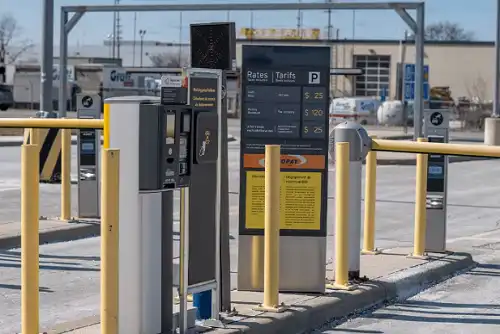
Parking system specifications should match facility size, usage patterns, and transaction volumes. High-traffic locations require durable hardware, reliable payment systems, and components designed for frequent use. Security requirements vary by environment, with open facilities needing stronger protection and controlled sites focusing more on user convenience. Proper evaluation prevents service issues and unnecessary costs.
Total Cost of Ownership Analysis
Buying something costs money, but that's only the beginning of the costs that come up over time. A full financial analysis must take into account the costs of setup, ongoing upkeep, software licensing fees, payment handling fees, and the costs of upgrading or replacing the system in the future. When compared to a $10,000 unit that needs frequent service calls and replacement when technology changes, a $15,000 self-service auto-payment station for parking lots with minimal upkeep requirements and modular upgrade paths might offer better value.
Installation costs depend a lot on the factors of the spot and how hard it is to integrate. Electrical and communication installation costs are kept to a minimum in buildings that already have conduit infrastructure and network connections. Places that need trenching, concrete work, or a lot of wire make rollout costs much higher. The level of complexity in software integration also affects costs. For example, facilities that are replacing old systems or merging with specialized access control platforms have higher modification costs than those that are launching turnkey solutions.
The cost of maintenance depends on the quality of the parts, the environment, and the number of transactions. The failure rate of stations installed in weather-protected areas is lower than that of stations installed outside in places that get high temperatures and rain. Machines that handle cash need to be cleaned and calibrated on a regular basis to keep working correctly. Thermal printers need paper rolls and sometimes a new printhead. Setting clear projections for maintenance costs keeps budgets from being surprised and lets you do accurate ROI calculations.
Supplier Selection and Partnership Considerations
Choosing a manufacturing partner requires evaluating product quality, customization capabilities, and long-term support. Experienced suppliers with certifications and proven projects provide reliable solutions. Flexible OEM and ODM options enable tailored hardware and software adjustments. Strong service systems, warranties, spare parts support, and maintenance programs help ensure stable operations and long-term partnerships.
Installation, Maintenance, and Support for Automated Parking Payment Systems
For system deployment to go smoothly, the site must be properly prepared, installation steps must be followed, and ongoing operating help must be provided. Whether or not equipment meets its performance goals and projected service life depends on how well these steps are carried out.
Site Preparation and Infrastructure Requirements
Successful installation requires proper site evaluation, stable concrete foundations, accessible layouts, and weather protection. Electrical systems must provide reliable power with surge protection and backup support for equipment safety. Network connectivity through wired or wireless solutions enables real-time communication, secure transaction data, and efficient system updates for reliable parking operations.
Ongoing Maintenance and Operational Support
Preventive maintenance reduces failures and extends equipment life through regular inspections, cleaning, and part replacement. Software updates improve security and functionality while allowing remote management of rates and settings. Rapid-response service agreements minimize downtime through quick repairs, remote diagnostics, and technical support, ensuring reliable operations and maintaining customer satisfaction.
Scalability and Customization Options
Modular parking systems support future expansion, technology updates, and increased capacity without replacing existing infrastructure. Custom solutions provide flexible pricing, branding, and multilingual options to meet specific facility needs. Integration with guidance systems, building management platforms, and other technologies enhances functionality, creating comprehensive parking solutions beyond traditional payment stations.
Future Trends and Innovations in Self-Service Parking Payment Technology
Customers' needs, smart city projects, and improvements in AI and connection infrastructure are all pushing the parking business to keep up with the fast pace of technological change. Facilities can avoid premature failure by making investment decisions based on what they know about new trends.
Artificial Intelligence and Advanced Recognition Technologies
AI-powered license plate recognition improves accuracy in challenging conditions and enables seamless barrier-free parking experiences. Machine learning helps systems adapt to different plate formats and improve over time. Predictive maintenance algorithms analyze operational data to identify potential failures early, reducing downtime, optimizing maintenance schedules, and improving overall system reliability.
Contactless and Mobile-First Solutions
Contactless parking solutions improve convenience through NFC payments, QR codes, and mobile technologies. Drivers can use phones, smartwatches, or cards for quick transactions without shared surfaces. Mobile-first systems provide digital tickets, app-based payments, and seamless experiences, while traditional payment options remain available for users without smartphones or facing technical issues.
Smart City Integration and IoT Connectivity
Smart parking systems connect with traffic, transit, and urban planning networks to improve mobility and reduce congestion. Real-time occupancy data guides drivers to available spaces and supports efficient transportation. IoT sensors monitor parking, security, and environmental conditions, enabling dynamic pricing, better space utilization, and optimized revenue through demand-based management.
Data Analytics and Business Intelligence
Advanced analytics transform transaction data into actionable insights, helping optimize staffing, pricing, and marketing strategies. Customer behavior analysis reveals parking patterns, payment preferences, and usage trends. Revenue optimization systems use dynamic pricing, demand-based rates, and promotions to maximize income while maintaining competitiveness, supported by flexible payment platforms capable of real-time adjustments.
Conclusion
Self-service parking payment stations self-service auto-payment station for parking lots are an important part of modern parking lots that want to be more cost-effective, run more efficiently, and give customers a better experience. The technology has come a long way and is now reliable, safe, and adaptable enough to be used in a wide range of places, from airports to shopping malls. To make implementation work, building needs must be carefully considered, suppliers must be carefully checked out, installation must be done correctly, and ongoing upkeep must be agreed upon. As technology keeps getting better through AI integration, mobile-first approaches, and smart city connectivity, buildings that invest in scalable, upgrade-ready systems will be able to take advantage of new ideas while protecting their current investments. This is because modular architectures allow for small improvements instead of full replacement.
FAQ
1.What happens if the payment station loses internet connectivity?
When the network goes down, professional payment kiosks go into "offline mode." The industrial computer stores all transaction data and pricing logic locally, so payments can be processed without stopping. Once connectivity is restored, the system instantly syncs the records of all the transactions with the central computer. This makes sure that no income data is lost. This extra security is especially helpful during bad weather or times when the network needs to be maintained.
2.How secure is customer payment information?
Payment security uses several layers of protection that meet industry standards. Card transactions use end-to-end security that meets PCI-DSS standards. This keeps data from being stolen while it's being sent. The system only keeps masked digits for writing receipts and never saves full card numbers. Physical security includes three-point locking systems, separate cash cassettes that need two forms of authorization, and, if desired, CCTV monitoring that records all transactions for dispute resolution.
3.Can existing parking infrastructure integrate with new payment stations?
Through open APIs and standard communication methods, modern payment stations can be connected to older parking systems. Most of the time, software configuration is needed instead of replacing hardware in order to make new equipment work with existing license plate readers, barrier gates, and access control systems. Suppliers with a lot of experience, like ZOJE, do pre-installation checks to see what integration needs to be done and then create unique solutions that work with current infrastructure investments and add new features.
4.What maintenance requirements should facilities expect?
As part of routine maintenance, cash handling mechanisms are cleaned, receipt paper is restocked, and parts are inspected on a regular basis to make sure they are working properly. Software updates happen remotely, delivering security patches and new features without having to visit the site. Surprising failures are less likely when high-quality parts have been tried through more than 10,000 transaction rounds. Comprehensive service agreements spell out reaction times and the supply of parts, which makes sure that problems are fixed quickly and that the system stays up more than 99% of the time.
Partner with ZOJE for Advanced Parking Payment Solutions
ZOJE makes automated payment kiosks that are the best in their field and are designed to work in tough business settings. Our systems have user interfaces that are based on Android, flexible ways to recycle cash, multiple payment methods like credit cards and QR codes, thermal paper printers, and full security with tamper alarms and optional CCTV integration. As a seasoned maker of self-service auto-payment station for parking lots, we offer full OEM and ODM design to make sure that the equipment fits your facility's needs perfectly. Deployment times are kept to a minimum by quick delivery plans (5-7 days for basic setups and 10-15 days for customized units). Our ISO 9001:2015 certification, two-year warranty, and 24/7 global technical support at info@zoje-tech.com make sure that your investment works well for as long as it's supposed to. Get in touch with our team right away to talk about how ZOJE's proven technology and dedicated partnership can change the way you run your parking lot.
References
1. Smith, J. & Anderson, M. (2023). Automated Parking Systems: Technology and Implementation Strategies. Urban Infrastructure Press.
2. International Parking Institute. (2024). Emerging Technologies in Parking Management: 2024 Industry Report. IPI Research Foundation.
3. Chen, L. (2023). "Revenue Control Systems in Commercial Parking: Efficiency and Security Analysis." Journal of Transportation Technology, 15(3), 245-267.
4. National Parking Association. (2024). Best Practices for Automated Payment System Deployment. NPA Technical Standards Committee.
5. Rodriguez, C. & Williams, T. (2023). Smart City Parking Solutions: Integration and Future Trends. Metropolitan Planning Publishers.
6. Thompson, R. (2024). "Total Cost of Ownership Analysis for Parking Payment Infrastructure." Parking Today Magazine, 29(2), 34-41.

Send Inquiry
You may like
Related Industry Knowledge
- How does the indoor parking guidance screen work?
- Parking Automatic Payment Station Integrated with LPR System for Commercial Projects
- What Is Tempered Glass Full-Height Turnstile? Features Guide
- How a Parking Payment Kiosk Works: A Step-by-Step Guide
- How Parking Management Barrier Gate Works Efficiently?
- What Is Security Anti-Collsion Barrier? Key Features
- How Automatic Parking Barrier Gate Improves Efficiency?
- Enterprise Parking Solution for High-Volume Commercial Parking
- Commercial Parking Efficiency Boost with ANPR System Explained
- How to Build an Open-Platform Parking Management System?