
What Are 24/7 Unattended LPR Parking Operations?
2026-08-19
Managing parking facilities has never been more challenging. Between labor shortages, rising operational costs, and customer demands for faster service, traditional parking management struggles to keep pace. That's where automated License Plate Recognition technology transforms your operations completely.
24/7 unattened LPR parking operations represent a fully automated parking management approach that uses advanced License Plate Recognition technology to control vehicle access, track occupancy, and process payments without requiring on-site personnel. Unlike legacy systems dependent on RFID cards or paper tickets, this operational model leverages optical character recognition algorithms to digitize vehicle identity instantaneously upon entry and exit. This automation addresses critical inefficiencies including revenue leakage from ticket fraud, substantial labor costs from round-the-clock staffing, and traffic congestion at entry points caused by slow manual processes.


Introduction to 24/7 Unattended LPR Parking Operations
A lot has changed in the world of parking management. In the United States, shopping malls, airports, neighborhoods, office buildings, and commercial parking lots all want solutions that work all the time without any human supervision. Staffed operations cause delays, raise overhead costs, and make it harder to grow as your business does.
Automated parking systems that use License Plate Recognition technology keep running all the time, no matter what time it is, what the weather is like, or whether there are enough staff members. Using high-resolution cameras, these smart systems read license plates, run the data through complex algorithms, and then automatically control entry barriers, process payments, and manage access. Without any help from a person, the technology can tell the difference between authorized vehicles, people with monthly permits, and temporary visitors.
The gains in organizational efficiency go beyond just automating tasks. Facilities that use 24/7 unattended LPR parking operations say that traffic flow, customer happiness, and income collection all get a lot better. Digital tracking and full audit trails improve security in a way that manual systems can't match. They also provide responsibility. These systems work well with larger company management platforms, which makes them useful in modern business settings like corporate campuses and mixed-use projects.
Commercial real estate managers like how automatic parking raises the value of their properties by making the experiences of tenants and visitors better. The technology is used by industrial facilities and transportation hubs to make managing fleets easier and make sites safer. The ability to run continuously makes sure that your parking assets make money and meet security standards 24 hours a day, 7 days a week.
Why Traditional Parking Management Falls Short
There are many problems with manual parking processes that hurt your bottom line. Staffing facilities around the clock means managing benefits, training programs, multiple shifts, and extra supervisory work. When people handle tickets incorrectly, they can lose money because of lost tickets, fake claims, and wrong fee estimates.
Another weakness is that physical tickets and entry cards can be lost or stolen. Customers lose tickets, which hurts relationships with other customers and leads to arguments. Card-based systems need real keys to be given out, replaced, and kept up to date. These old ways of doing things slow down traffic during busy times, which annoys customers and lowers the throughput capacity.
The Automated Alternative
With smart automation, these problems are no longer a problem for 24/7 unattened LPR parking operations. As cars go through entry and exit points, they don't stop to get tickets or cards. The system keeps track of each car, sets the right prices, and takes digital funds. Customers are happier with this frictionless experience, and it makes operations simpler.
The technology can be changed to meet different business needs. People who have a monthly pass can go through the barrier without having to take any extra steps. Retail point-of-sale systems can automatically apply discounts when guest validation systems are connected to them. Time-based pricing, differentiating rates based on car type, and complicated rate structures all work automatically, without any help from staff.
How Does 24/7 Unattended LPR Parking Work?
Knowing the technical architecture lets you compare various solutions and make smart choices about what to buy. Several parts of the system are integrated and work together to provide smooth automation.
Core System Components
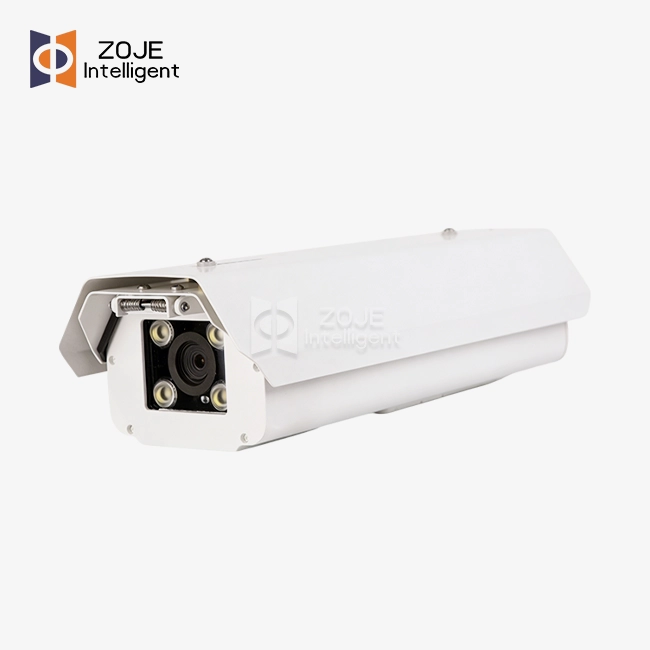
High-definition LPR cameras capture license plates in varied lighting, while the ZOJE-LPR101’s starlight CMOS sensor supports reliable day-and-night recognition. Dual-core processing and CNN acceleration enable recognition in under 200 milliseconds and at vehicle speeds up to 40 km/h. Barrier gates respond automatically, while loop detectors prevent tailgating. Backend software manages vehicles, payments, access, reporting, and 24/7 operations.
Operational Workflow Step-by-Step
The LPR camera captures license plates, processes images through edge-based recognition, and verifies vehicle authorization. Whitelisted vehicles receive automatic access, while visitor vehicles are tracked for billing and validation. During exit, the system matches entry records, calculates parking duration, applies pricing rules, processes digital payments, and opens the barrier after successful payment completion.
Addressing Environmental Challenges
The ZOJE-LPR101 is designed to maintain reliable performance in harsh outdoor environments, with IP64 protection, strong construction, and resistance to temperature changes, rain, dust, and corrosion. Smart lighting, LED fill lights, and Wide Dynamic Range technology improve recognition in challenging conditions. Its 70-degree wide-angle capability supports accurate capture across different facility layouts and vehicle approaches.
Key Advantages of Using 24/7 Unattended LPR Parking
The case for automated parking management is based on improvements in operations that can be measured and money that can be made. Knowing these benefits helps you decide if an investment in 24/7 unattended LPR parking operations is worth it and set reasonable goals for performance.
Substantial Labor Cost Reduction
Getting rid of the need for 24-hour staffing saves money right away and over time. In traditional buildings, there are multiple sets of attendants, booth operators, and security guards. For these jobs to exist, there must be pay, perks, training programs, and supervision. Having parking attendants leave and come back causes extra costs for hiring and training new people.
With automated systems, workers are only needed for routine repair trips and monitoring from afar. In 8 to 14 months, most facilities get their full return on investment just from saving money on labor. There are no breaks, shift changes, or hiring gaps that affect service quality during holidays or staffing problems with the ZOJE-LPR101. It works nonstop.
Enhanced Revenue Capture
There are many places where money is lost when operations are done by hand. Facilities lose a lot of money every year because people who say they lost their tickets pay flat maximum fees instead of the real amount of time they were parked. Swapping tickets between cars, using the wrong validation form, and making mistakes with fees all lower income even more.
With digital tracking and automatic billing, automated LPR systems get rid of these weaknesses. Every time a car enters or leaves the area, an exact timestamp is recorded. This makes sure that the duration calculation is correct. When you connect to payment gateways, you can automatically charge registered vehicles' credit cards or process digital payments at the exit for visitors who are only there for a short time. Instead of manually marking tickets, which could lead to theft, validation systems apply discounts automatically based on data from the point of sale.
The data shows very good results. Through improved accuracy and fraud prevention, facilities that use 24/7 unattened LPR parking operations typically make 15 to 25 percent more money than those that use manual systems. This increase in revenue, along with the decrease in labor costs, makes for a strong improvement in financial performance.
Improved Traffic Flow and Customer Experience
Automated license plate recognition improves traffic flow and customer satisfaction by removing delays caused by traditional ticket systems. Vehicles can enter and exit quickly without stopping for tickets, increasing facility capacity without expansion. Digital payment options through mobile apps provide a convenient, contactless experience by allowing users to pay, check parking time, and receive receipts easily.
Comprehensive Security and Access Control
Automated LPR systems improve security through continuous monitoring, digital audit trails, and anti-tailgating detection. Features such as whitelist and blacklist management enable flexible access control for residential, commercial, and sensitive facilities. Data protection measures, including license plate hashing and retention policies, support GDPR compliance while safeguarding customer information and maintaining reliable security operations.
Scalability Across Diverse Environments
Modern LPR systems support diverse environments, including malls, airports, residential communities, offices, and commercial parking facilities, through flexible configurations and management features. The ZOJE-LPR101 offers hardware and software customization, secondary development options, and compatibility with TCP/IP and RS485 protocols. This scalability allows integration with existing barriers, payment systems, and platforms while reducing replacement costs.
Comparing 24/7 Unattended LPR Parking Solutions
To choose the best system for your building, you need to carefully compare different options based on your unique working needs. Several important performance measures and design factors set the different choices apart for 24/7 unattended LPR parking operations.
Recognition Accuracy and Speed
Recognition accuracy and speed are key factors in LPR performance. Leading systems achieve over 99% accuracy, enabling reliable plate identification across different conditions with minimal manual intervention. The ZOJE-LPR101 provides 99% recognition accuracy and fast processing to maintain traffic flow. Evaluation should include performance under various speeds, lighting conditions, and plate conditions to ensure consistent operation.
Edge Computing vs. Cloud Processing
Architecture choices affect system reliability, with cloud-based processing depending on stable internet connections and facing risks from outages, bandwidth limits, and delays. Edge computing enables local image processing, allowing continuous operation during network issues. The ZOJE-LPR101 supports offline recognition, 512GB local storage, and automatic data synchronization after reconnection, ensuring reliable 24/7 LPR parking operations.
Integration Flexibility and Customization
Flexible LPR solutions should adapt to each facility’s infrastructure and operational needs through extensive hardware and software customization. The ZOJE-LPR101 supports secondary development, OEM/ODM options, and integration with management, payment, and access-control systems. Compatibility with TCP/IP and RS485 protocols also enables connection with existing barriers, intercoms, and other equipment, reducing deployment costs and protecting existing investments.
Environmental Durability and Reliability
Installations outside have to deal with harsh weather that tests the sturdiness of the equipment. When building isn't up to par, things break down early, which costs money in repairs and replacements and takes away from the benefits of total cost of ownership. Protective ratings, operating temperature ranges, and the quality of the materials used should all be looked at.
The IP64 grade on the ZOJE-LPR101 makes sure that it works well in wet, snowy, and dirty places. The operating temperature range of -20℃ to +60℃ covers a wide range of climates, from cold winters in the north to hot summers in the desert. Corrosion resistance is important for coastal installations and cities with a lot of pollution, so high-strength carbon steel construction with protective coatings is used.

Procurement and Installation Guide for 24/7 Unattended LPR Parking Systems
To get through the acquisition and deployment process for 24/7 unattened LPR parking operations, you need to know about important decision points, review factors, and best practices for application. This organized method guarantees that the project will be a success.
Identifying Qualified Suppliers
Choose suppliers with proven experience, certifications, and technical capabilities. Established in 2012, ZOJE has over ten years of experience in parking and access control systems, supported by ISO 9001:2015 certification and multiple patents. Beyond products, reliable suppliers should provide complete project support, including 24/7 technical assistance, installation guidance, maintenance services, and ongoing customer engagement.
Pre-Purchase Evaluation Criteria
Before selecting a provider, define business needs, current challenges, expected transaction volume, integration requirements, and operational goals. Clear requirements help suppliers design suitable solutions. Consider warranty terms, limitations, and service support, such as ZOJE’s two-year guarantee. Delivery timelines should also match project schedules, with standard products in 5–7 days and customized solutions in 10–15 days.
Installation and Integration Planning
Professional installation is essential for LPR system stability and efficiency, requiring expertise in camera placement, electrical setup, networking, and barrier integration. A phased deployment approach reduces risks and allows system testing before full implementation. Clear operating rules, including pricing, access permissions, validation, and payment processes, should be configured and verified before launch.
Ongoing Maintenance and Support
Schedules for preventive maintenance keep things running at their best. Inspections done on a regular basis find problems before they become major ones. Schedules should be made for cleaning camera lenses, making sure block gates work, and checking the accuracy of recognition in a range of settings.
Remote monitoring makes it possible to find problems before they happen. Systems that warn operators when the recognition rate drops, when equipment breaks down, or when traffic patterns change in a strange way allow for quick action before it affects customers. ZOJE's technical support is available 24 hours a day, seven days a week, so you can get help whenever you need it.
Future Trends and Innovations in Unattended LPR Parking
The world of parking control technology is changing very quickly. Knowing about new trends helps you make smart investment choices for 24/7 unattended LPR parking operations that will keep your assets from becoming outdated too soon.
Artificial Intelligence and Machine Learning Integration
AI and machine learning enhance vehicle recognition, security monitoring, and parking operations by identifying unusual patterns and predicting occupancy for dynamic pricing. Continuous learning improves recognition across diverse plates and environments. The ZOJE-LPR101 can identify over 1,500 vehicle models and 150 brands, enabling vehicle-based pricing and more personalized services while increasing system value over time.
Internet of Things Ecosystem Integration
These days, parking systems are part of larger ecosystems for smart buildings and cities. Integration of IoT makes it possible for systems that handle parking, building entry, elevator pre-calling, and visitors to work together. This integration makes things run smoothly, so when you pay for parking, it instantly triggers actions in other linked facilities.
Smart city projects use collected parking data to make better urban planning, better traffic control, and less traffic jams. Anonymous, compiled usage data helps city planners figure out how people move and how many parking spots are needed across the city's infrastructure.
Contactless and Mobile-First Experiences
Changes in behavior caused by the pandemic sped up the need for contactless purchases and exchanges. Modern parking systems work with mobile apps that let you make reservations, pay, and get your receipt without having to touch a terminal. If you lose faith in your license plate reader, you can use QR code backup entry ways as an alternative.
Using a digital card with Apple Pay, Google Pay, and other platforms makes parking transactions more in line with trends in the payment environment as a whole. Customers expect the same payment experience across all types of services, and parking lots that meet these needs see higher customer satisfaction and loyalty.
Sustainability and Environmental Considerations
Managing parking lots automatically helps reach environmental sustainability goals in several ways. Less time spent waiting at entry and exit points lowers pollution from vehicles. Better traffic flow reduces traffic jams and the damage they do to the earth. Paper tickets are no longer needed because of digital transaction processing.
Adding charging ports for electric vehicles is becoming more and more important. These days, LPR systems handle managing charging sessions, integrating payment, and assigning parking spaces specifically for electric vehicles. With these skills, your location will be ready to serve changing numbers of vehicles as the transition to electric vehicles speeds up.
Conclusion
Modern parking lots need automated systems that work all the time, keep things safe, and give customers a great experience. 24/7 unattened LPR parking operations can do all of these things while also lowering labor costs by a large amount and increasing revenue collection. The technology has grown up to the point where it can work reliably in a wide range of settings, from airports and shopping malls to residential areas and commercial parking lots. When choosing a solution, you should put accuracy in recognition, edge computing design, durability in harsh environments, and the ability to get help from suppliers at the top of your list. The ZOJE-LPR101 system has all of these important features: it can recognize 99% of things, has front-end processing, a lot of customization choices, and world support services. Usually, investment returns show up within 8 to 14 months through reduced labor costs and higher income. Ongoing business benefits continue to accrue as systems last longer.
FAQ
1.How do unattended LPR systems handle dirty or damaged license plates?
Professional systems employ multiple recognition strategies to maximize success rates even with challenging plate conditions for 24/7 unattended LPR parking operations. The ZOJE-LPR101 captures multiple images of each plate and applies fuzzy matching algorithms that compensate for partial obscuration or damage. When recognition confidence falls below acceptable thresholds, the system can trigger backup identification methods including QR codes, credit card entry, or remote operator assistance. Vehicle color and model recognition provides additional verification data. This multi-layered approach ensures operational continuity even when ideal plate capture proves impossible.
2.What happens during internet or power outages?
Edge computing architecture ensures continued operation during network disruptions. The ZOJE-LPR101 performs front-end recognition locally, storing transaction data on internal memory up to 512GB capacity. Barriers continue operating based on local whitelist verification and offline billing calculations. When connectivity restores, transaction data synchronizes automatically with backend management systems. Power loss protection through uninterruptible power supply integration enables graceful shutdown and rapid recovery when power returns, preventing data corruption or extended downtime.
3.Can the system integrate with existing parking infrastructure?
Modern LPR solutions support extensive integration capabilities. The ZOJE-LPR101 offers TCP/IP and RS485 communication protocols compatible with most barrier gates, intercoms, and payment terminals. Custom software integration enables connection with property management systems, building access control, and enterprise resource planning platforms. This flexibility protects existing infrastructure investments while adding advanced automation capabilities. Professional integration services ensure seamless deployment across diverse technical environments.
Partner with ZOJE for Advanced Parking Automation Solutions
Facilities all over the world trust ZOJE's enterprise-grade 24/7 unattened LPR parking operations solutions. Our ZOJE-LPR101 system has a front-end processing design, is fully waterproof, and can be customized in a number of ways. It has been shown to be 99% accurate at recognizing objects. As an experienced maker of 24/7 unattended LPR parking operations, we welcome OEM and ODM partnerships, which lets us create custom solutions that meet your exact operational needs. Our fast delivery times are good for shopping malls, airports, residential areas, office buildings, and business parking providers. Standard products are delivered in 5 to 7 days, and custom solutions are delivered in 10 to 15 days. Our ISO 9001:2015-certified manufacturing guarantees consistent quality, and our two-year warranty and expert help available around the clock, seven days a week will protect your investment. Email our team at info@zoje-tech.com to talk about how we can help you automate your parking needs.
References
1. American Public Transportation Association. (2021). Parking Management and Operations: Best Practices for Transit Agencies. Washington, DC: APTA Publications.
2. International Parking & Mobility Institute. (2022). Emerging Technologies in Parking Management: license plate recognition systems. Fredericksburg, VA: IPMI Press.
3. Journal of Transportation Engineering. (2020). Automated Parking Management Systems: Performance Analysis and Operational Benefits. Vol. 146, Issue 8, pp. 04020086.
4. National Institute of Standards and Technology. (2019). Optical Character Recognition Standards for Vehicle License Plates. NIST Special Publication 500-329.
5. Transportation Research Board. (2021). Integration of Automated Vehicle Identification in Parking Facilities. NCHRP Report 945. Washington, DC: The National Academies Press.
6. Urban Land Institute. (2022). Smart Parking Solutions for Mixed-Use Developments: Technology Assessment and ROI Analysis. Washington, DC: ULI Publishing.

Send Inquiry
You may like

Related Industry Knowledge
- How LPR Parking Solutions Boost Security and Efficiency
- The Benefits of Using a Entrance Parking Guidance Digital LED Panel for Parking Garages
- What is an LPR Camera? License Plate Recognition Cameras Explained
- Indoor Guidance Display Screens play an important role in Parking Lots
- Vehicle Loop Detector for Parking Management System Features You Should Know Before Buying
- Parking Guide Configuration Tool Features You Should Know Before Buying
- How Parking Management Barrier Gate Works Efficiently?
- Bridge-Style Tripod Turnstile Benefits in Office Security
- How High-Speed Access Control Turnstile Gate Works?
- License Plate Recognition vs ANPR: Key Differences